Meta tags play a pivotal role in how search engines interpret and rank your website. They are crucial for guiding search engines like Google in understanding your content and ensuring it reaches the right audience. By providing relevant information about a webpage’s content, meta tags affect how your website is displayed in search engine results pages (SERPs) and can influence click-through rates (CTR). In this article, we’ll explore how search engines use meta tags, the different types of meta tags, and how you can leverage them for better SEO performance.
Search engines utilize various meta tags, such as the meta description and meta robots, to determine how to index and display your page. These tags help search engines decide which content is most relevant and should appear in search results. Meta tags also provide detailed information about your page that helps search engines understand your content better. To fully benefit from meta tags, you need to know how they work and how to use them effectively in your SEO strategy.
What Are Meta Tags and Why Do They Matter for SEO?
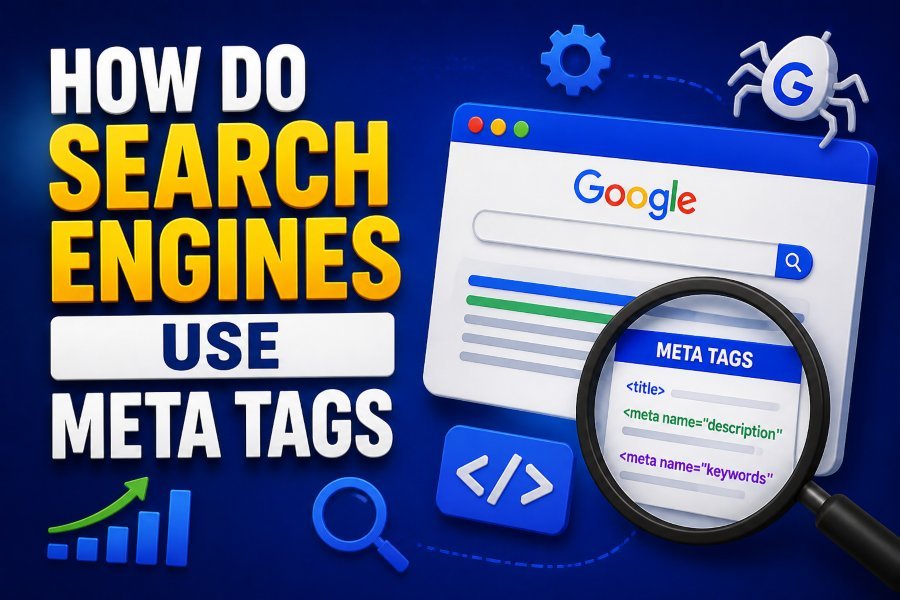
Meta tags are snippets of text that describe a webpage’s content. While they don’t appear directly on the page, they provide important metadata to search engines and browsers. For SEO, meta tags can influence both search engine rankings and how a page appears in search results. Here are the main types of meta tags used in SEO:
- Meta Description: This tag provides a brief summary of the content on a page. Though it doesn’t directly affect rankings, a well-written meta description can boost your click-through rate (CTR) by enticing users to visit your page.
- Meta Robots: This tag instructs search engines on how to crawl and index a page. It tells search engines whether to index the page, follow the links on it, or ignore both.
- Meta Keywords: Although this tag used to be important for SEO, it’s now considered obsolete for ranking purposes. Google no longer uses it to determine a page’s relevance.
- Meta Viewport: This tag is crucial for mobile-friendly websites. It helps ensure that pages are optimized for display on various screen sizes.
Understanding how search engines use these tags is essential to maximizing your website’s potential in search engine rankings. For more information on optimizing your meta tags, you can explore services like professional SEO services provider UK for tailored SEO strategies.
How Search Engines Use Meta Tags for Ranking
Search engines use meta tags to understand the content of a webpage, which helps them rank it appropriately. Here are the ways search engines use meta tags for ranking:
- Meta Description: While it doesn’t directly influence rankings, the meta description is often displayed in search results. A compelling meta description can improve your CTR, which indirectly affects rankings. When crafting your meta descriptions, aim for clarity and relevance. For example, if your page focuses on “how do search engines use meta tags,” make sure your meta description reflects this.
- Meta Robots: This tag is crucial for managing indexing behavior. Search engines follow instructions in the meta robots tag, such as whether to index the page or follow links. By using “noindex” or “nofollow,” you can control which pages are indexed and which are not.
- Mobile Optimization: With the increasing importance of mobile-first indexing, meta tags like the viewport tag ensure that your site is mobile-friendly. Search engines like Google prioritize mobile-optimized pages, so ensuring your meta tags are correct is essential.
Understanding how these tags impact your rankings is key to enhancing your SEO efforts. For more insights into ranking strategies, consider consulting professional link building services UK for effective techniques.
The Role of Meta Tags in Improving Click-Through Rates (CTR)
One of the most significant benefits of using meta tags correctly is improving your click-through rate (CTR) in search results. A well-crafted meta description can catch the attention of users and entice them to click on your page. Here’s how meta tags can help improve your CTR:
- Appealing Meta Descriptions: Since meta descriptions appear directly in search results, they serve as a “preview” of your content. A concise, informative description increases the likelihood that a user will click on your link. By using the right meta tags, you make it easier for search engines to show the right snippets to users.
- Accurate Title Tags: The title tag, although not technically a meta tag, also plays a major role in determining CTR. It should be relevant and include your targeted keywords to ensure it aligns with user search intent.
By optimizing your meta tags, you’re ensuring that your content not only gets indexed but also gets noticed. If you’re looking for professional help with SEO, check out eCommerce SEO for UK brands to enhance your website’s visibility and performance.
Meta Tags for Social Media and Open Graph Protocol
In addition to their use by search engines, meta tags also help optimize your content for social media platforms. Using the Open Graph Protocol (OGP), you can control how your page appears when shared on platforms like Facebook and Twitter. Here are some key meta tags for social media optimization:
- og:title: Specifies the title of your page when it is shared on social media.
- og:description: This provides the description that will appear with your link on social media platforms.
- og:image: This tag allows you to control the image displayed alongside your link.
Using the right meta tags can significantly improve how your content appears on social media, increasing engagement and driving more traffic to your site. By understanding and implementing Open Graph meta tags, you ensure your content is optimized for both search engines and social media platforms. To learn more about technical SEO and its importance, consider exploring technical SEO services for UK brands.
Conclusion
Meta tags are an essential part of SEO and web development. They help search engines understand your content, improve your rankings, and optimize your visibility in search results. From meta descriptions to robots tags, these small snippets of HTML code can have a significant impact on your website’s performance. To maximize your SEO strategy, make sure you’re using meta tags effectively to increase your CTR and rank higher in search results.
FAQs
How do search engines use meta tags to improve rankings?
Meta tags help search engines understand the content of your page. They provide essential metadata, guiding search engines in ranking and displaying your page. Properly optimized meta tags, such as descriptions and robots, enhance visibility and CTR.
What is the role of the meta description tag?
The meta description tag summarizes the page’s content for search engines. While not directly affecting rankings, a well-crafted description can improve click-through rates by attracting users to click on your page in search results.
How does the meta robots tag affect indexing?
The meta robots tag instructs search engines on whether to index a page or follow its links. Using “noindex” or “nofollow” can prevent search engines from indexing specific content, giving you control over which pages appear in search results.
Can meta tags improve my site’s click-through rate (CTR)?
Yes, meta tags, especially the meta description, influence CTR by providing a concise, attractive summary of your page. A compelling description helps users decide to click, indirectly improving your rankings by increasing engagement and reducing bounce rates.
Are meta tags still important for SEO?
Yes, meta tags remain a vital part of SEO. They help search engines understand your content and improve visibility in search results. Optimized tags can also impact CTR, which indirectly affects your rankings and overall site performance.
What is the meta viewport tag used for?
The meta viewport tag is essential for mobile optimization. It ensures your website scales properly on mobile devices, improving user experience. Search engines like Google prioritize mobile-friendly sites, making this tag crucial for SEO.
Do search engines use meta keywords for ranking?
No, meta keywords are no longer a factor for ranking. While once important, search engines like Google no longer use this tag to evaluate relevance or index pages. Focus on other meta tags for better SEO results.
How do Open Graph meta tags help SEO?
Open Graph meta tags optimize how your content appears on social media platforms. By controlling titles, descriptions, and images, these tags increase engagement, which can indirectly boost traffic to your site, improving SEO performance.
Can meta tags affect my website’s mobile ranking?
Yes, meta tags like the viewport tag directly influence mobile ranking. Search engines like Google prioritize mobile-friendly websites, and using the correct meta tags ensures your site performs well across different devices, contributing to better rankings.
How do I write effective meta descriptions?
To write effective meta descriptions, ensure they are concise, relevant, and include targeted keywords. Focus on creating compelling summaries that match search intent and encourage users to click. Keep descriptions under 160 characters to optimize search results visibility.